Project archive
Billy J rebuild
A Shopify Plus fashion storefront rebuilt in 105 days, with agents writing most of the code and machines doing most of the review.
- My role
- Engineering lead and one of five developers
- When
- April — August 2026, at Prosper Digital
- Original
- billyj.com.au
- Archived
A copy kept here in case the original moves, goes offline, or I lose access to it.
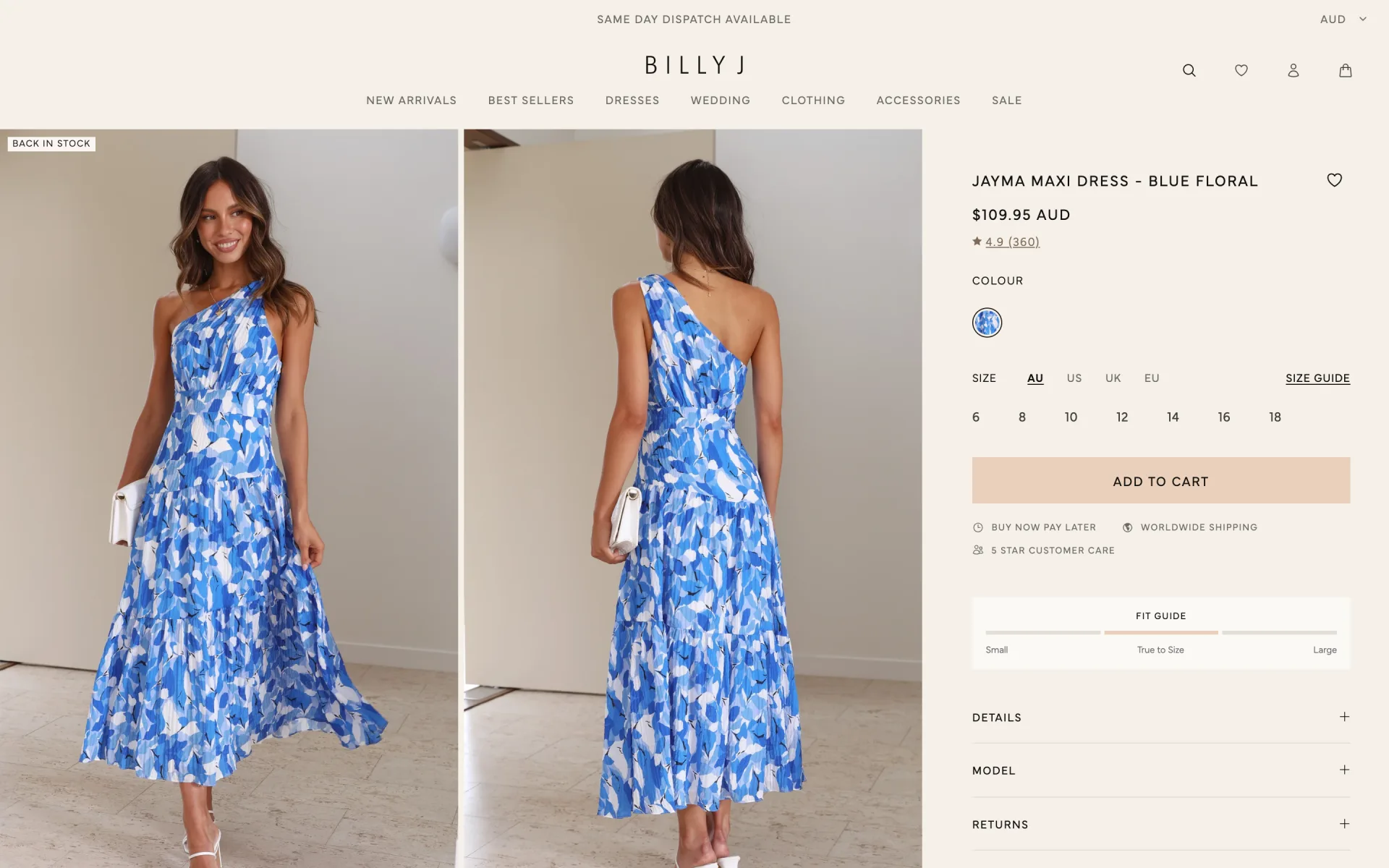
Billy J is an Australian fashion label. Prosper Digital rebuilt its Shopify Plus storefront from a fresh theme repository, and I led the engineering. It went live on 5 August 2026, the date we had published three weeks earlier, with no go-live crunch: the busiest week was in late June.

It was also the first full project where agents did most of the work. These numbers come from the repository and the team's retrospective.
In numbers
- 105 days, kickoff to launch, across 7 curated releases.
- 371 merged pull requests and 394 non-merge commits from five developers.
- Approximately 80% of merged pull requests were agentic, made in Claude sessions.
- Accessibility 97 and SEO 100 in Lighthouse at release, the best scores of any Prosper build so far. Performance was orange rather than red for the first time.
- 285 QC defects filed, 264 fixed, median close 5.1 days, 10% reopened.
The agentic share counts work marked as co-authored by Claude, plus one developer who worked agentically but committed by hand. Early work by developers who adopted agents later stays counted as manual.
Merged pull requests per week
Kickoff to a week after launch · 371 in total
| Week of | Merged pull requests |
|---|---|
| 27 Apr 2026 | 4 |
| 4 May 2026 | 37 |
| 11 May 2026 | 25 |
| 18 May 2026 | 35 |
| 25 May 2026 | 23 |
| 1 Jun 2026 | 10 |
| 8 Jun 2026 | 18 |
| 15 Jun 2026 | 34 |
| 22 Jun 2026 | 44 |
| 29 Jun 2026 | 10 |
| 6 Jul 2026 | 31 |
| 13 Jul 2026 | 16 |
| 20 Jul 2026 | 8 |
| 27 Jul 2026 | 34 |
| 3 Aug 2026 (launch week) | 40 |
| 10 Aug 2026 | 2 |
Machines as the review layer
Pull requests merged on about 120 automated checks rather than a human code review, with a median of 2.5 minutes from open to merge. Quality came from three loops instead:
- Visual QC against Figma. An agent skill follows a ticket to its pull request and Figma frame, swaps the page's text for the design's copy, then compares the build with a pixel diff and per-element boxes, so any difference left is styling. A full product or collection page takes 20–30 minutes.
- Bug pickup. A skill reads each QC issue, analyses it, estimates it and ranks its size before an agent fixes it. The team now keeps those estimates for scheduling and billing.
- Human QC. A dedicated QC engineer tested every release by hand.
What it taught us
- Agents made developers interchangeable. Five people shared one repository without the usual cost of a newcomer re-reading the code: the agent read it for them.
- The bottleneck moved to design. Designs covered the main state only. Empty, error, loading and out-of-stock states were scoped in every ticket but never drawn, so developers invented them. Two components carried 28% of all defects.
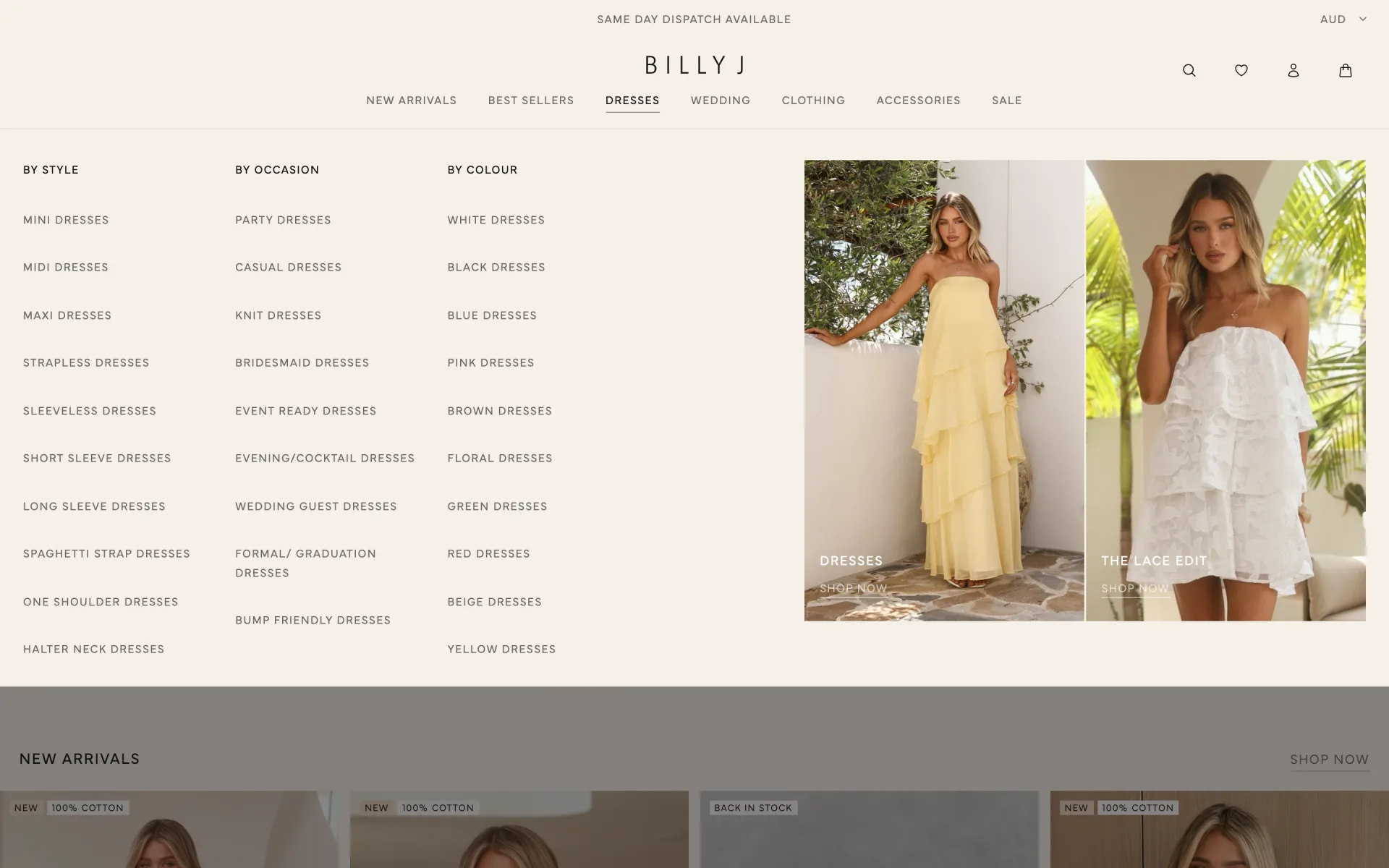
- Prototypes beat review rounds. The mega menu, prototyped interactively with Claude, settled in two review rounds; its sibling, reviewed over recorded walkthroughs, took more than five.
- Fixes go back into the template. Lessons became skills and rules in create-theme, shipped to every theme repository by its weekly sync pull requests.
Built with
Shopify Plus, Liquid, Vite, Tailwind v4 and pd-components, released through Prosper's Shopify–GitHub pipeline. First uses at Prosper of the Web Animations API and CSS subgrid. Agents ran on Claude, from Sonnet 4.6 to Opus 5, guided by about 3,100 lines of versioned instructions.